
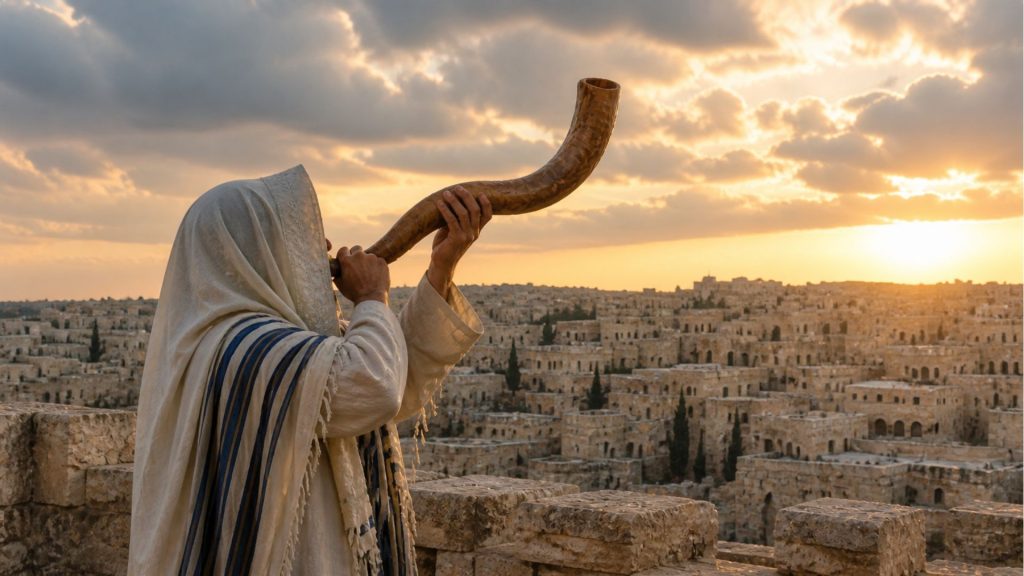
This week’s double Torah portion, Parashat Behar and Parashat Bechukotai (Leviticus 25–27), opens a window into the extraordinary generosity of Hashem. It reveals a God whose kindness is not confined to individual blessing but extends into the structures of society and even into the land itself. In the commandments of Sh’mitah and Yovel, we encounter a vision of life ordered not by scarcity or control, but by trust, restraint, and divine provision. Even the word “Jubilee” reflects this reality, coming from the Hebrew Yovel, the ram’s horn whose blast announces the fiftieth year, a reminder that this is not merely an idea, but a proclamation meant to be heard and lived.
The Rhythm of Rest: Trusting the Giver
We often think of Shabbat as a gift for individuals, a weekly pause for rest, but the Torah expands that vision outward. Rest encompasses the entire community and even the natural world. In Israel, everyone rests: the powerful and the vulnerable, men and women, servants and strangers, and even animals are drawn into this rhythm of divine mercy. The Torah then extends this principle further. Every seventh year, the land itself must rest. Fields are left unworked, interrupting the human instinct toward endless production and challenging the assumption that survival depends solely on effort.
Instead, Sh’mitah calls for trust. God promises provision in advance, enough to sustain His people through the season of rest, making the Sabbatical year a lived declaration that Hashem is the true source of sustenance. The land, therefore, is not ours to possess absolutely; we are sojourners upon it. As the Torah declares, “The land is Mine,” a truth echoed in Midrash Sifra, which emphasizes that Israel’s relationship to the land is one of stewardship under divine ownership. What we have is entrusted, not owned, and that reality reshapes how we live, calling us to humility in our work, restraint in our consumption, and reverence in our stewardship.
Jubilee: Liberty and Responsibility
If the Sabbatical year teaches trust, the Yovel proclaims liberty. After seven cycles of seven years, the fiftieth year is announced with the sounding of the shofar on Yom Kippur, and a declaration of freedom echoes across the land. Debts are released, servants return to their families, and land reverts to its original inheritance. The accumulation of generations is interrupted, resetting society in a profound way.
This is not merely economic policy; it is a theological statement. It affirms that everything belongs to the Lord and that no human claim is absolute. Wealth cannot become permanent domination, and poverty cannot become permanent identity. Here the Torah speaks directly into the human condition. As Abraham Joshua Heschel observed, while religious institutions and political authority may be separated, faith itself cannot be separated from human life. The commands of Sh’mitah and Yovel insist that holiness must shape how people live together.
This vision is reinforced in Deuteronomy 15, where the Torah declares that there shall be no needy among you, not as a description of reality, but as a mandate for what must be pursued. The rabbinic tradition wrestles with this tension. In Ketubot 67b, the sages teach that the poor must be supported according to their dignity, even reflecting a previously higher standard of living. Poverty relief is not merely about survival; it is about restoring honor. Similarly, in Mishneh Torah, Hilchot Matanot Aniyim, Maimonides outlines levels of tzedakah, placing the highest form not in giving alone but in enabling self-sufficiency. The Torah’s vision holds both immediate relief and long-term restoration together.
These principles come into sharper focus: everything belongs to God, wealth is never absolute, the lives of the wealthy and the poor are intertwined, and corrective measures are necessary to prevent destructive inequality. Every human being bears inherent dignity, and preserving that dignity is a communal responsibility. Poverty relief, therefore, is not optional; it is part of the work of redemption. This is why the warning of the sages is so striking: one who has the ability to protest injustice and remains silent becomes accountable for it (Shabbat 54b). Responsibility extends outward, from the individual to the entire community.
The Messiah and the Fulfillment of Jubilee
The vision of Yovel does not end in the Torah. It is taken up by the prophet Isaiah, who speaks of one anointed by the Spirit to proclaim liberty to the captives and the year of the Lord’s favor. That vision comes into focus when Yeshua stands in the synagogue and declares that the Scripture has been fulfilled in their hearing. In that moment, the promise of Jubilee is no longer only a command or a hope; it becomes embodied in a person.
Yeshua does not merely announce freedom; He brings it. He releases those bound by sin, restores those who have been diminished, proclaims good news to the poor, and reorders lives around the kingdom of God. In Him, the rhythms of rest and the proclamation of liberty converge. Jubilee is no longer tied to a calendar cycle but becomes a living reality, the favor of the Lord present and active.
Living the Jubilee Today
To follow the Messiah is to live within this reality. It is to trust in God’s provision rather than grasping for control and to steward what we have with humility and purpose. It is also to take seriously the call to responsibility, recognizing that faith cannot be separated from the human condition. To ignore injustice is not only a social failure but a spiritual one.
We are called to preserve dignity, relieve suffering, and participate in God’s work of restoration through both immediate acts of compassion and long-term commitments to justice. This requires wisdom, courage, and perseverance. To live this way is to become a people who reflect God’s character, a community where the vulnerable are seen, resources are held with open hands, and hope is sustained.
It All Belongs to the Lord
In the end, the message of these portions is clear: everything belongs to Hashem, the land, our lives, our resources, and our future. And yet, He gives generously, provides continually, and restores faithfully. In Yeshua, the shofar has sounded, liberty has been proclaimed, and the year of the Lord’s favor is not distant but present.
The question is whether we will live as though that is true. May we receive this freedom with humility, carry it with responsibility, and proclaim it not only with our words, but with lives shaped by justice, mercy, and trust.
1 comment for “Behar and Bechukotai – The Jubilee and the King: Proclaiming Liberty in the Lord”