
Counting More Than Numbers
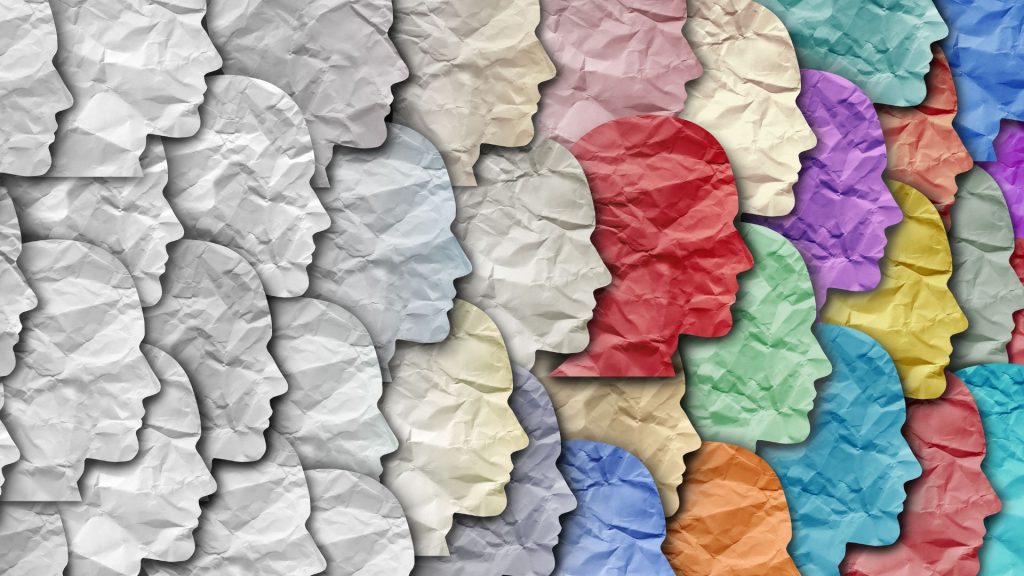
There is something both necessary and unsettling about a census. Most of us understand why governments conduct them. Demographic information helps determine where roads are built, where hospitals are needed, how schools are funded, and how communities receive resources. Yet even with all of that practical necessity, there remains something deeply uncomfortable about being counted. To be counted is to be known. It is to disclose something about yourself, your family, your existence, and your place within society. Beneath the bureaucratic forms and statistics lies a subtle fear that we may become nothing more than numbers in a system too vast to remember our names.
That tension is not new. In the book of Bamidbar, Israel also stands before a census. The Holy One commands Moses and Aaron to count the people tribe by tribe and family by family. Yet the Torah uses an unusual phrase when describing the census: b’mispar shemot, “by the number of the names.” The language is deliberate. God was not assigning identification numbers to anonymous bodies wandering in the wilderness. The census was an act of recognition. Each person possessed a name, and each name represented a soul of immeasurable worth. Through this process, Moses and Aaron were being taught that leadership begins by seeing people not as statistics, not as problems to solve, and not as functions within an organization, but as sacred human beings created in the image of God.
The rabbis understood this principle deeply. In the Mishnah, Sanhedrin 4:5, we are reminded that while a human king mints many coins from one mold and all emerge identical, the Holy One creates every person from the mold of Adam and yet no two people are alike. Therefore, whoever saves a single life is regarded as though he has saved an entire world. The census in Bamidbar reflects this same truth. God counts because God values. Heaven knows every name because every soul matters.
Rugged Individualism and the Need for Community
This truth confronts one of the deepest assumptions of modern Western culture. We live in a civilization that prizes rugged individualism. Independence, autonomy, and self-definition are treated as the highest ideals. To have value, we are told, we must become radically independent and entirely unique.
There is something partially true in this. Every human being is unique. No two souls are identical. We possess different temperaments, experiences, wounds, strengths, and histories. God delights in diversity. Yet for all our talk of independence, very few people ever become fully individualized in the way modern culture imagines. We are shaped profoundly by family, language, tradition, memory, ethnicity, culture, and community. None of us emerges from a vacuum. Human beings are relational creatures, and we become ourselves through relationships.
This creates a paradox. The modern world tells us that wholeness is achieved through radical independence, but the truth is almost the opposite. The human soul becomes whole not by escaping others, but by learning to live faithfully among them. We need each other in order to become ourselves. What we truly need is not rugged individualism, but what might be called soft individualism, a recognition that each person possesses uniqueness and dignity while simultaneously belonging to something larger than themselves.
The Covenant and the Meaning of Community
This is why covenant in the Torah is never merely individual. God speaks to individuals, calls individuals, and redeems individuals, but the covenant itself is with the community of Israel. The people stand together at Sinai. They wander together in the wilderness. They suffer together, rejoice together, fail together, and are restored together. The covenant creates a people.
Rabbinic tradition captures this beautifully with the phrase Kol Yisrael arevim zeh bazeh, “All Israel is responsible for one another” (b. Shevuot 39a). Jewish life has always understood that the individual cannot be separated from the community because the spiritual health of one person inevitably affects the whole.
A true community is not merely a collection of isolated individuals occupying the same physical space. Community gives meaning to individuality itself. It becomes the environment in which souls are formed, tested, refined, and healed. Communities rejoice together, mourn together, carry one another’s burdens, and learn to make another person’s condition their own.
In many ways, community itself is mysterious. Dr. M. Scott Peck, in The Different Drum, compares community to a gemstone hidden within the earth. The raw stone contains beauty within it, but until it is cut and polished, that beauty remains concealed. Humanity contains within itself the seeds of community, but authentic fellowship requires shaping, sacrifice, patience, and refinement. Like a gem, community is revealed through its many facets: compassion, forgiveness, vulnerability, loyalty, truthfulness, generosity, and endurance.
A Safe Place for Souls
One of the greatest gifts a community can offer is safety. Most people move through life without ever feeling fully known or wholly accepted. Beneath our social performances lies a deep fear of rejection. We long to belong, yet we fear exposure.
Healthy congregations and healthy Jewish communities must therefore become relatively inclusive places. The question should not be, “How can we justify taking this person in?” but rather, “How could we justify keeping this person out?” This does not mean that boundaries disappear or that every difference can be absorbed without discernment. Every community requires moral and spiritual boundaries. The challenge is learning where those boundaries belong without losing compassion.
What destroys many communities is not disagreement, but the development of factions and cliques. Such divisions create insiders and outsiders and communicate that belonging must be earned through social compatibility rather than covenant faithfulness. They wound people deeply because they strike at the fundamental human longing to be seen and received.
True community becomes what we might call a laboratory for disarmament. In a world built on self-protection, communities of faith should become places where people slowly learn to lay down their armor. Vulnerability has a way of spreading. When one person speaks honestly about weakness, others discover permission to do the same. Healing begins when masks come off.
This is why Yaakov exhorts believers to confess sins to one another (James 5:16). Such confession cannot happen in communities that refuse to tolerate sinners. Grace creates honesty, and mercy creates openness. The New Covenant writings consistently portray healing as something that occurs within relationships rather than isolation. Rav Shaul exhorts believers to “bear one another’s burdens, and thereby fulfill the Torah of Messiah” (Galatians 6:2). The community of faith becomes a place where burdens are carried together, wounds are acknowledged honestly, and grace is extended generously. Such communities reflect the heart of Messiah Himself, who continually moved toward the wounded rather than away from them.
Learning to Fight Gracefully
At first glance, it may seem paradoxical that a safe and compassionate community would also experience conflict. Yet wherever human beings gather, disagreements inevitably emerge. Different personalities, perspectives, expectations, and wounds collide. Communities will never entirely eliminate conflict, but they must learn to prevent conflict from devolving into emotional bloodshed.
Pirkei Avot teaches us that every dispute “for the sake of Heaven” will ultimately endure, while disputes driven by ego and self interest destroy communities (Pirkei Avot 5:17). The issue is not whether disagreements will happen, but whether we will handle them with wisdom, humility, and grace.
Yeshua’s teachings push us toward this difficult work of reconciliation. He warns against contempt and bitterness and calls His followers to seek reconciliation quickly and humbly (Matthew 5:21–24). In a fractured and polarized world, communities shaped by Messiah should become places where disagreement does not automatically lead to division, exile, or humiliation.
The community of faith should become a place where people respect one another’s gifts while also accepting one another’s limitations. It should be a place where wounds are bound rather than exploited and where people commit themselves to struggling together instead of against one another. Peace within a congregation is not achieved by the absence of conflict, but by learning to engage conflict without destroying one another in the process.
The Dream of Community
Many people believe that if a group can resolve its conflicts, then it can finally live together in community. But perhaps the truth is the reverse. Perhaps if we first learn how to live together in covenant faithfulness, then over time we may discover how to resolve our conflicts. The dream of community is not the absence of disagreement. The dream is the presence of love strong enough to survive disagreement.
When God commanded Israel to count the people “by the number of the names,” He was teaching His people something profound. Every name matters because every soul matters. Communities exist to remind human beings that they are more than numbers, more than functions, and more than statistics. They are sacred lives woven together by covenant and grace.
If we can abandon the illusion of rugged individualism and embrace instead the wisdom of soft individualism, then our congregations, synagogues, families, and communities can become places that truly make souls count, places where every person is valued, every wound matters, every gift is honored, and every soul is ennobled in the presence of God.