
The conflict between the diversity of humanity is woven throughout the entire book of Genesis. From the moment of creation, the tensions between male and female, parents and progeny, and of course between siblings pervades the narratives of the book. These tensions also mirror their own inner struggles and humanities struggle with the Creator and creation.
This week we move very close to the conclusion of B’reishit as parasha Miketz prepares to bring the conflict between Joseph and his brothers to its inevitable pinnacle. The intrigue of this portion demands a conclusion, but instead ends on a cliff hanger as Benjamin, a complete innocent is used as an apparent pawn in Joseph’s complex effort toward an unclear goal. Is he seeking vindication, revenge, justice, or continued aggrandizement, or true reconciliation with his brethren?
As Genesis closes with the unification of Israel, the true wholeness of this people is never truly completed. The descendants of the tribes remain in internal and intrafamily turmoil and will eventually end in the gelut (diaspora) that we presently find ourselves. This division will only truly conclude when a sovereign act of the Holy One of Israel, will unite the entire people of Israel. In the interim, the progeny of Jacob remains on trial as they do in this week’s portion. Or is it God’s sustaining love for Israel that is on trial?
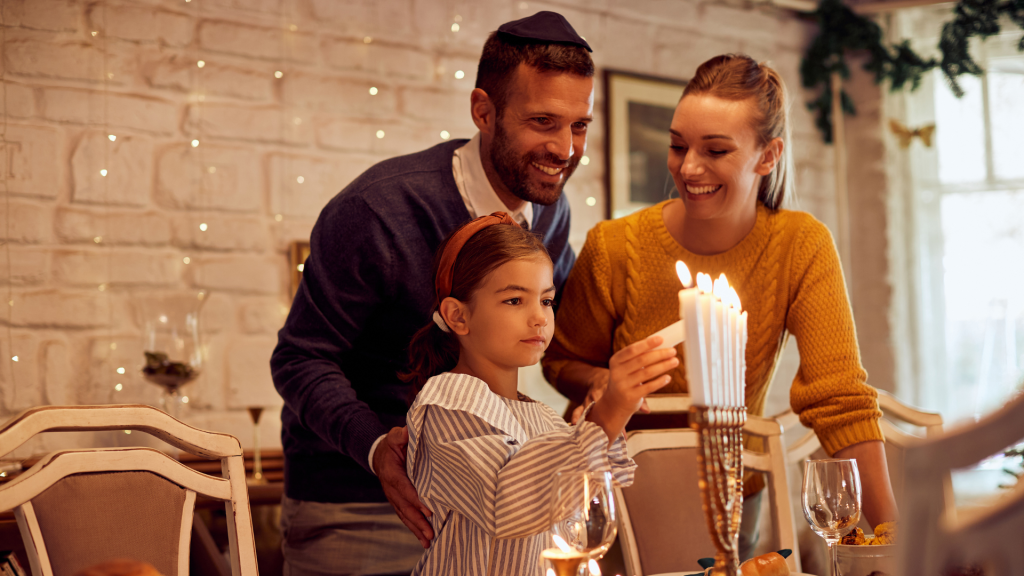
This week we read Miketz as we often do, during the intermediary days of Hanukkah. This juxtaposition, at first glance, is somewhat unrelated. But a deeper dive exposes the story that is quintessential to the entirety of Torah, the unity of Israel, and Hashem’s ability and desire to sustain His people. Hanukkah is not principally a story of military might, religious freedom, or universal inclusivism. Rather it is a story of faithfulness, Israel’s faithfulness to its God, and God’s faithfulness to Israel. The miracle of Hanukkah, one day’s sanctified oil lasting eight days for the Temple menorah, is the symbolic gesture of the Holy One sustaining his light in the abode of His faithful servants.
Thus, the rabbis’ choice of the haftarah reading for Shabbat Hanukkah. Though the Torah assigns no specific meaning to the seven branch candelabras, the Hanukkah haftarah portion is much more elucidating. Zechariah’s vision explains that the menorah symbolizes God as judge and the lights are His eyes roving providentially over all the earth. The oil is “piped” directly from an olive tree to the menorah, representing God’s direct provision. (Zech. 4:10-14).
Zechariah’s vision is in fact a prophetic drama, which uses a courtroom motif to vindicate the salvation of Hashem when the returning remnant were downtrodden during failed attempts to rebuild the temple under the leadership of Zerubbabel. In this drama, Joshua the high priest stands before the angel of the Lord and the Satan is in effect the prosecuting attorney. I believe it is no accident the name Joshua itself means “Hashem’s Salvation.” In this scenario the angel of the Lord who serves as the “defense attorney” rebukes the accuser and the vindicated hero is described as a “brand plucked from the fire.” Joshua has his ragged clothes removed, and he is adorned in attire appropriate to a Kohen and crowned with a “pure turban”. (Zech. 3:1-5) This would be an appropriate time to “drop the mic” and move on, since the God of Israel has once again made His point. But this drama of deliverance has a sequel which is introduced with a “post credit trailer”. God declares to the court, “Hearken well O Kohen Gadol Joshua, you and your fellow priests sitting before you. For those men are a sign that I am going to bring My servant the Branch. (3:8)”
Yeshua, an abbreviated name for Joshua (Yehoshua), entered the historical drama where the salvation of Hashem was again placed on trial. Though he also was silent before his accusers, the highest court vindicated him and crowned him with the victory of God. While Joshua the Kohen Gadol was often paired with Zerubbabel a descendant of David and heir to the royal line, Yeshua stood on trial as both priest and king, the ultimate Messianic figure, the ultimate “Branch”, the quintessential “brand plucked from the fire.” He will also be the unifier of Israel and the intercessor who will make peace between Israel and Israel’s God.
Yeshua is the light that dispels the darkness, the one who brings peace and unity. We live in a time where division often dominates our thoughts and our ambitions. We harbor suspicions of others punctuated by often unfounded assumptions. All to often we become the accusers of our brethren, of ourselves and often accusers of God. Certainly, our reliance upon the Holy blessing One suffers and is diminished. But we can rise above this. During this season, as we commemorate the great miracles that God has brought, let’s remember the light that he brings into our midst, and among our brethren.