
Déjà Vu at Sinai
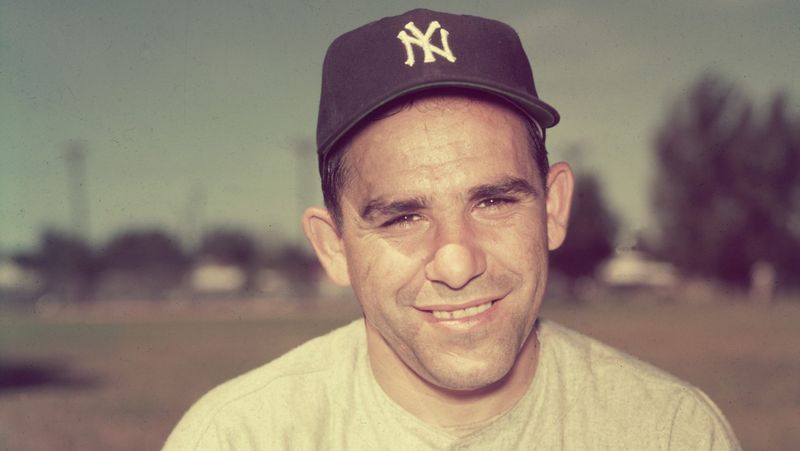
Yankee Hall of Famer Yogi Berra was renowned for his unique and often comical way of turning a phrase. One expression that became part of the American lexicon was, “It’s like déjà vu all over again.” Déjà vu, of course, is that strange sensation that somehow, we have been here before, that what we are experiencing feels mysteriously familiar.
If only we could experience the reality of Scripture in that way. Yet in many respects, we are invited to do exactly that. Each week, when we open the Torah, we do so as though we are standing again at Sinai, receiving anew the instruction and gift of the Holy One. The sages even taught that “every day the words of Torah should be new to you, as though you received them that very day” (Sifre Devarim 6:6). On Shavuot, that sense should only deepen.
Pentecost Is Greek to Me
Many believers in Yeshua speak of desiring the same kind of experience as the original disciples in Acts 2, complete with the miraculous outpouring of the Ruach HaKodesh. They often describe this as being “Pentecostal.” Yet before we can understand what a truly Pentecostal experience means, we first need to understand the nature of the event itself.
Few Jewish people realize that Shavuot became known in Christian tradition as Pentecost, and few Christians recognize that Pentecost is simply the Greek word for Shavuot. It is not another holiday, nor is it a replacement holiday. It is Shavuot itself, the Feast of Weeks, fifty days after Passover (Lev. 23:15–16). It is one of the shalosh regalim, the three pilgrimage festivals in which all Israel was commanded to appear before the Lord in Jerusalem (Exod. 23:16; Exod. 34:22; Deut. 16:16). It is also the celebration of firstfruits and the wheat harvest (Num. 28:26; Deut. 16:10), and above all, the season associated within Jewish tradition with the giving of Torah, Zman Mattan Torateinu, “the time of the giving of our Torah.”
A Jewish Renewal Movement
When Acts 2 takes place, it does not happen apart from Jewish life; it happens at the very center of Jewish life. In many Christian circles, Pentecost is often called “the birthday of the Church.” Yet that phrase can unintentionally obscure what was actually happening in Jerusalem.
Acts does not describe the creation of a new non Jewish religion detached from Israel. Rather, it describes a Jewish renewal movement ignited by the Spirit of Hashem in the midst of the Jewish people. The prophet Joel had already declared, “I will pour out My Spirit on all flesh” (Joel 2:28–29), and Ezekiel spoke of a time when God would place His Spirit within Israel and cause His people to walk in His statutes (Ezek. 36:26–27). Shavuot in Acts 2 is presented as the beginning of that restoration.
Still in the Temple Courts
The group gathered in Jerusalem was entirely Jewish. They were in a Jewish city, celebrating a Jewish festival, and waiting for the fulfillment of the promises spoken through the prophets concerning the Spirit of God. Luke tells us explicitly that there were “devout Jewish men from every nation under heaven living in Jerusalem” (Acts 2:5).
The crowds that gathered were Jewish pilgrims from throughout the nations, the Scriptures quoted by Kefa were the words of the prophets of Israel, and the three thousand who responded in faith were Jewish men and women who continued living within the life of the wider Jewish community. Acts tells us that they “continued daily with one accord in the Temple” (Acts 2:46). They did not see themselves as abandoning Jewish life, but as experiencing its fulfillment and renewal through Messiah Yeshua.
The Spirit moved among them not in isolation from Jewish existence, but in the marketplace, the Temple, and the rhythms of everyday Jewish life.
A Jewish Renewal Movement
This continuity is essential to understanding the early Messianic movement. Had these Jewish believers viewed themselves as leaving Judaism behind, they would not have remained centered around the Temple courts, nor would they have continued participating so naturally in the life of the Jewish people.
Even years later, Yaakov could say to Paul, “You see, brother, how many thousands there are among the Jews of those who have believed, and they are all zealous for the Torah” (Acts 21:20). What emerges from Acts is not separation from Israel, but renewal within Israel. The earliest followers of Yeshua understood themselves to be participating in the restoration of their people and the fulfillment of God’s covenant promises.
No Branding, Just Transformation
What is equally remarkable is how organic this movement was. There were no strategies for branding, no carefully engineered campaigns for growth, and no manufactured spirituality. There was simply a community transformed by the Spirit of Hashem, living faithfully, loving deeply, walking in holiness, and bearing witness to Messiah.
Through that authentic life, “the Lord added to their number daily those who were being saved” (Acts 2:47). Acts records that “many wonders and signs were taking place through the emissaries” (Acts 2:43), and later we are told that although many stood in awe, “more than ever believers were added to the Lord” (Acts 5:12–14).
This is profoundly counterintuitive to many modern assumptions about congregational growth. The early community grew not because it marketed itself effectively, but because it embodied the reality of the Kingdom of God.
Rediscovering Our Foundations
For us as a Messianic Jewish community, this carries profound implications. If we truly see ourselves as part of a restoration movement, a renewal of authentic Jewish faith in Messiah Yeshua, then we must learn again how to walk freely and faithfully within the Jewish world.
Our calling is not merely to imitate the forms of modern religious culture, but to rediscover the Jewish spiritual foundations of the earliest followers of Yeshua. That means becoming increasingly obedient to the mitzvot, mishpatim, and middot of Hashem. As Yeshua Himself taught, “If you love Me, you will keep My commandments” (Yohanan 14:15).
It means living with expectancy for the outworking of the miraculous, recognizing that the same Ruach HaKodesh poured out in Jerusalem has not ceased to move among the people of God. It means walking in the joy of the Lord, because “the kingdom of God is righteousness and peace and joy in the Holy Spirit” (Rom. 14:17).
It means becoming bridge builders and peacemakers, fulfilling Yeshua’s words, “Blessed are the peacemakers, for they shall be called sons of God” (Matt. 5:9). And it means cultivating lives that are deeply attractive because they reflect the presence of God.
The sages taught in Pirkei Avot 1:12, “Be among the disciples of Aaron, loving peace and pursuing peace, loving people and drawing them near to Torah.”
Standing Again at Sinai
Today there is much discussion about “Jewish renewal,” but often this simply means renewed ethnic or cultural interest in Jewish identity and continuity. While those things matter, for us renewal must go deeper.
True Jewish renewal means returning to the higher calling of Israel, to serve Hashem wholeheartedly and to become “a kingdom of priests and a holy nation” (Exod. 19:6).
Perhaps that is the true message of Shavuot, not simply remembering what happened long ago, but allowing the Spirit of Hashem to renew us again in our own generation.
The rabbis taught that when Israel stood at Sinai, every Jewish soul, including future generations, was somehow present there (b. Shabbat 146a). Whether understood literally or spiritually, the point is profound. Revelation is never merely about the past. It is about covenant renewal in every generation.
And if we yield ourselves again to that purpose, perhaps it truly can become Shavuot all over again.