
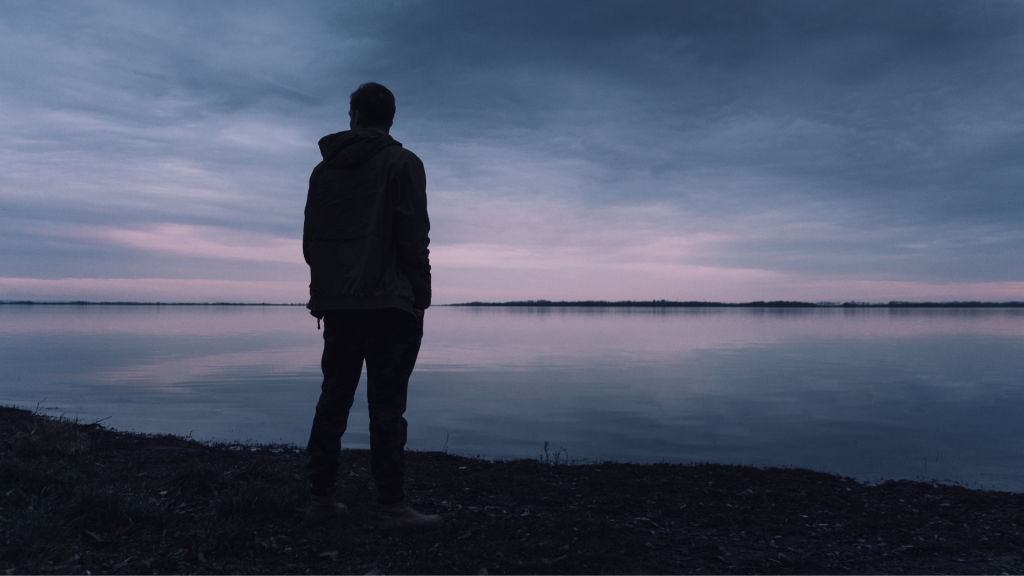
Jacob stands alone in the darkness by the river Jabbok, that narrow tributary of the Jordan where heaven once opened to him in a dream . Now the night feels far heavier. The promises of God seem distant, muffled by fear. Ahead lies Esau—his estranged brother, perhaps still bent on revenge . Behind him is Laban, whose deceits echo Jacob’s own . And caught between past and future, Jacob sends his family across the water and stays behind . Alone. In the dark.
Rabbinic tradition pays close attention to that single phrase: “Vayivater Ya’akov levado—Jacob remained alone” (Genesis 32:25). Bereishit Rabbah comments that God often meets people in such moments, in the stillness where distractions are stripped away (Bereishit Rabbah 77:1). The Zohar notes that “just as God is called ‘levado—alone,’ so Jacob entered the divine solitude” (Zohar 1:165b). In other words, the darkness is not just a setting; it is a spiritual condition. Jacob is being prepared—though painfully—for encounter and transformation.
And it is precisely in this darkness that the wrestling begins.
The Torah identifies Jacob’s mysterious opponent only as “a man” (Genesis 32:25), leaving generations of commentators to wrestle with the identity of the wrestler. Rashi suggests this is Esau’s guardian angel (Rashi on Genesis 32:25). Ramban says the battle is both physical and deeply inward (Ramban on Genesis 32:26). Midrash Tanhuma says Jacob is wrestling with his own accumulated fear and guilt (Tanhuma, Vayishlach 8). In the darkness, all such interpretations feel true. The night has a way of revealing not only spiritual forces but our own shadows—our anxieties, our regrets, the unresolved pieces of our past that step forward to confront us.
And still Jacob clings: “I will not let you go unless you bless me” (Genesis 32:27). This is Jacob as we have rarely seen him—not plotting, not running, but holding on with a desperate, almost holy stubbornness. He is no longer wrestling the world to extract advantage; he is wrestling God for identity. The darkness has forced him to stop grasping and start yearning.
Yeshua too wrestles in the dark. In Gethsemane, under the cover of night, he faces betrayal, abandonment, and imminent suffering. His prayer, “Let this cup pass from me” echoes Jacob’s cry for deliverance (Matthew 26:39; Luke 22:42). And yet, just as Jacob refuses to release his hold, Yeshua remains steadfast in the Will of the Father: “Not my will, but yours be done” (Luke 22:42). The besorah portrays this moment as so intense that his sweat becomes like great drops of blood (Luke 22:44). Yeshua enters the deepest darkness—loneliness, fear, sorrow—and wrestles not for himself, but for the redemption of others. Both Jacob and Yeshua meet God most profoundly not in daylight clarity but in the obscurity of the night.
As dawn begins to break, Jacob’s opponent touches his hip and wounds him (Genesis 32:26). The sages teach that this limp becomes his lifelong reminder that no one encounters God in the dark and emerges unmarked. The wound becomes part of the blessing.
Then the turning point arrives: “What is your name?” the angel asks (Genesis 32:28)—not for information, but for confession. Midrash Tanhuma teaches that in speaking his own name, Jacob acknowledges the truth of his past—Ya’akov, the heel-grabber, the deceiver, and the struggler. Only then can God give him a new name: Israel, “one who wrestles with God and with people and prevails” (Genesis 32:29). This is not triumphalism. It is transformation. Jacob went into the darkness with fear; he comes out with identity. He enters as Jacob; he emerges as Israel.
And the rabbis note something fascinating: whenever he is called “Israel,” it signals that he is living into his highest calling (see Rashi on Genesis 35:10). Whenever he is called “Jacob,” it is a reminder that he is still on the journey. Transformation is real, but it is ongoing—just as wrestling through the night is only one step toward morning.
In our faith, the quintessential Israel—Yeshua—also enters the darkness to emerge with a new name. Above the cross hangs a mocking inscription: “King of the Jews” (Yochanon19:19). But three days later, resurrection breaks like dawn (Matthew 28:1–6). Forty days later he ascends (Acts 1:9). And Revelation proclaims that he is now called “King of Kings and Lord of Lords” (Revelation 19:16, a title not given in ridicule but in glory. Through his own wrestling in the dark, through suffering, obedience, and trust, his identity is illumnined.
If Jacob’s story teaches us anything, it is that darkness is not the enemy of faith. It is often the birthplace of faith. The night is where clarity comes painfully, slowly, honestly. We all wrestle in the dark—through uncertainty, illness, loss, anxiety, strained relationships, unanswered prayers. Our struggles may not be with angels, but they are no less real. And like Jacob, we are tempted to flee them. Yet the transformation of Israel happens only because Jacob stops running.
The prophet Isaiah promises: “You shall be called by a new name which the mouth of the Lord shall bestow” (Isaiah 62:2). The sages explain that even when we cannot yet see our own transformation, God sees the person we are becoming. God calls us by the name of our future, not the name of our fear.
This is the hope embedded in the darkness: that when the night feels endless, the dawn is already on its way. Jacob emerges limping but blessed. Yeshua emerges scarred but glorified. And we emerge—slowly, painfully, faithfully—into the identity God is shaping within us.
Because the truth is this: our deepest identity is often revealed only after we have wrestled in the dark.
One day, as Isaiah and Revelation both assure us, God will speak our truest name aloud (Isaiah 62:2; Revelation 2:17). And on that day the long night of wrestling will give way to light. But even now, even in the dark, we can trust that the God who met Jacob by the river and Yeshua in the garden will meet us in our own midnight hour.
For God is not only the God of daylight clarity.
God is also—maybe especially—the God who meets us when we wrestle in the dark.
1 comment for “Vayishlach – Wrestling in the Dark”