
A Kingdom Unlike Any Other
The Torah places before us what appears to be a contradiction.
In Deuteronomy 15:4 Moses declares with breathtaking confidence, “There shall be no destitute among you.” Yet only a few verses later he says, “The poor will never cease to be in the land” (Deuteronomy 15:11).
Which is it? Will there be no poor, or will there always be poor?
Both statements are true, but they describe two different realities. Deuteronomy 15:4 reveals God’s covenant vision. If Israel faithfully practiced the release of debts and cared for one another as He commanded, poverty would never become a permanent condition within the covenant community. There might be seasons of hardship, but no one would remain trapped in them because the covenant community itself would become the means through which God provided for His people. Deuteronomy 15:11, however, acknowledges the stubborn reality of human sin and ongoing chaos. Fear, selfishness, and injustice ensure that until God’s Kingdom is fully realized, there will always be people in need. The apparent contradiction is therefore no contradiction at all. One verse proclaims God’s intention; the other recognizes humanity’s persistent failure to embody it.
At the center of this passage stands the Shemitah, the Sabbatical Year. Every seventh-year debts were to be released (Deuteronomy 15:1–3). Creditors surrendered what was owed to them, not because loans no longer mattered, but because covenant mattered more than profit. God was teaching Israel that no brother or sister should remain permanently crushed under the weight of debt. The amount of a loan was expected to reflect how close the next Shemitah year was. A loan made six years before debt release could reasonably expect six years of repayment, while one made only a year before Shemitah would naturally be smaller because there was less time for repayment. Just as land values were determined by the number of harvests remaining until the Yovel (Leviticus 25:13–17), loans were to be made with God’s calendar in view.
Human nature, however, found a way around God’s intention. As the seventh year approached, many lenders became reluctant to make loans that might soon be forgiven, despite Moses’ explicit warning: “Be careful lest there be a base thought in your heart… and your eye be hostile toward your poor brother” (15:9). The commandment intended to protect the poor ironically discouraged generosity.
Centuries later, Hillel the Elder sought to address this problem through the Prosbul, a legal instrument that transferred private debts to the authority of the beit din. As the Mishnah explains (Mishnah Shevi’it 10:3–4), Hillel instituted the Prosbul because he saw that people were refusing to lend as the Shemitah approached, thereby violating the very commandment intended to protect the poor. Because the Torah’s command applied to debts between private individuals, debts held by the court could still be collected after the Sabbatical Year. Hillel was not attempting to nullify the Torah but to preserve another commandment that was being neglected: “You shall surely lend him sufficient for his need” (15:8). His solution was practical and compassionate, preserving access to credit for the poor. Yet the very need for the Prosbul exposed a deeper problem. It solved the legal dilemma, but it could not transform the human heart. Israel had found a way to preserve lending without confronting the fear and self-interest that made the Prosbul necessary in the first place. The problem was never the Torah; the problem was that no legal system, however wise, can produce the generosity that the Torah ultimately requires.
Open Your Hand
That ancient struggle remains remarkably familiar. We live in a culture that celebrates accumulation, measuring success by what we possess, what we save, and what we control. Scripture certainly commends diligence and wise stewardship, but the Kingdom of God measures prosperity differently. In God’s economy, blessing is never merely something to possess; it is something entrusted to us for the sake of others.
That is why Moses warns, “Be careful lest there be a base thought in your heart… and your eye be hostile toward your poor brother and you give him nothing.” The danger begins long before the hand refuses to give. It begins in the heart, where we quietly calculate, justify, and protect ourselves from generosity. Only afterward does the hand close. The Torah’s answer is wonderfully simple: “You shall surely open your hand to him.” Generosity is not simply philanthropy or kindness; it is covenant faithfulness, reflecting the character of the God who has been generous toward us.
Isaiah echoes this same vision when he proclaims, “Ho! Everyone who thirsts, come to the waters; and you who have no money, come, buy and eat” (Isaiah 55:1). Earlier he declares that the fast God desires is “to share your bread with the hungry, bring the homeless poor into your house… and not hide yourself from your own flesh” (Isaiah 58:6–10). God’s generosity toward His people was always intended to become His people’s generosity toward one another.
When Yeshua announced that the Kingdom of God had drawn near, He was announcing far more than individual forgiveness. Standing in the synagogue at Nazareth, He read from Isaiah, “The Spirit of the Lord is upon Me… to proclaim liberty to the captives… to proclaim the favorable year of the Lord” (Luke 4:18–19; Isaiah 61:1–2). His words deliberately echoed the language of Yovel, announcing release, restoration, and the arrival of God’s long-awaited reign. The covenant life envisioned by Moses, anticipated by the prophets, and symbolized by Sabbath, Shemitah, and Yovel was beginning to take shape in the community gathered around Israel’s Messiah. The Kingdom He proclaimed was not merely about personal salvation; it was about restoring God’s covenant life among His people.
The Kingdom Made Visible
Luke intentionally describes the earliest Messianic community with language that echoes Deuteronomy 15. “There was not a needy person among them” (Acts 4:34). Those words are more than a historical observation; they are a theological declaration. Luke is inviting us to recognize that the covenant ideal Moses envisioned was beginning to appear within the community formed around Yeshua. The Kingdom was becoming visible. Their generosity was not compelled by law but flowed freely from hearts transformed by the Ruach Hachodesh(Acts 2:44–45).
This does not mean poverty disappeared forever. Acts itself later records collections for believers suffering through famine and hardship (Acts 11:27–30), reminding us that the reality of Deuteronomy 15:11 remained. Yet the earliest community demonstrated that the values of the coming Kingdom could already be embodied in the present. The Kingdom of God had broken into history, and God’s people were beginning to live according to the realities of the age to come.
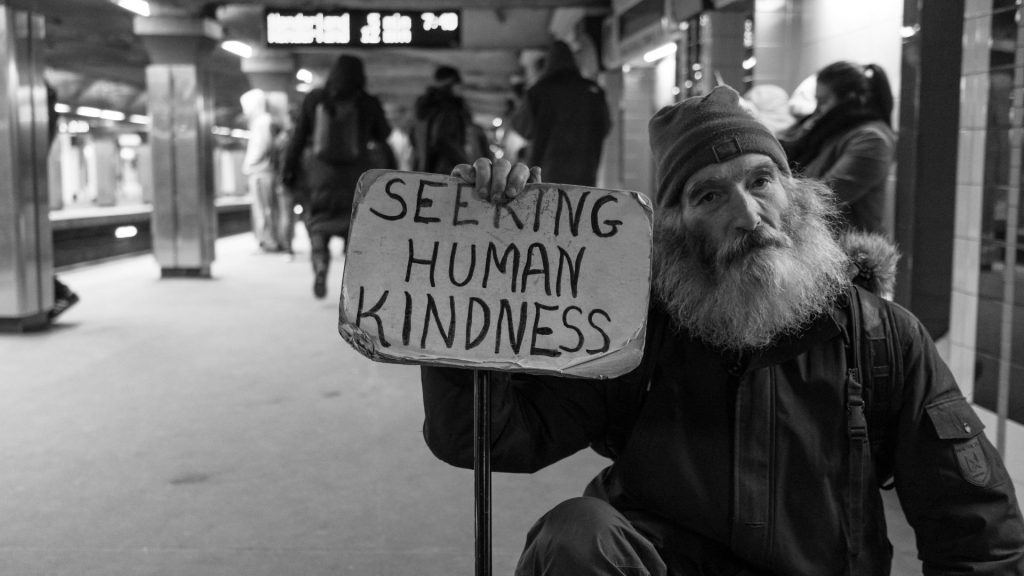
That remains our calling today. We know that the poor will never cease from the land; Yeshua Himself acknowledged that reality (Matthew 26:11). Yet those words were never intended as an excuse for resignation or indifference. Rather, they remind us that every generation is given fresh opportunities to embody God’s generosity. Every meal shared, every debt forgiven, every burden carried, every stranger welcomed, and every person restored to dignity becomes a witness that the Kingdom of God has already broken into history.
Moses gave Israel the vision. The prophets longed for its fulfillment. Yeshua inaugurated it. Whenever God’s people choose open-handed generosity over fearful accumulation, they offer the world a glimpse of the coming reign of God.
We proclaim the Kingdom with our lips, but we make it visible with our lives.