
Justice Begins with Mercy
One of the most persistent misunderstandings of Scripture is the belief that the Torah reveals a God of judgment while the Besorot reveal a God of grace. Few portions challenge that misconception more clearly than Masei. As Israel stands poised to enter the Promised Land, before cities of commerce are established, before military fortifications are built, and before political institutions are organized, the Holy One commands that Cities of Refuge be established. Before Israel learns how to defend herself, she must first learn how to show mercy.
This ordering is no accident. The Torah is not merely a legal code but God’s gracious instruction, teaching His covenant people to move beyond humanity’s instinct for vengeance and become a community marked by justice, compassion, and holiness. The Cities of Refuge (Bamidbar 35:9–15) were virtually without parallel in the ancient Near East. Rather than allowing an endless cycle of blood vengeance, the Torah provided sanctuary for one who caused death unintentionally until justice could be rightly discerned. Even the familiar phrase, “an eye for an eye,” was never permission for personal revenge, but a limit upon vengeance, ensuring that justice remained measured and proportionate.
It is equally significant that these cities were entrusted to the Levites. Those who ministered before God also became guardians of mercy. Justice in Israel was never to be driven by uncontrolled emotion, but administered within a covenant community reflecting the character of its God. Vengeance belonged to the Holy One. His people were called to pursue justice tempered by mercy.
A Place to Rest
There is another beautiful irony hidden within this portion. The Cities of Refuge appear in Massei, the account of Israel’s forty-two wilderness journeys. For forty years Israel herself had been a people on the move, learning to trust God one campsite at a time. Now, as they prepare to settle permanently in the Land, God commands them to establish places where others may stop running.
Every journey toward holiness requires places of refuge. God’s purpose was not simply to bring Israel into the Land, but to form a people who reflected His own character. Before Israel could become a light to the nations, she first had to become a community where mercy restrained vengeance and truth was given room to emerge.
That calling has never changed. Our congregations are likewise called to become places of refuge. People arrive carrying grief, shame, broken relationships, disappointments, and burdens invisible to everyone else. The synagogue must never ignore sin, but neither should it become a place where wounded people fear seeking healing. Often, before we can continue walking with God, we need a place where grace allows us to catch our breath.
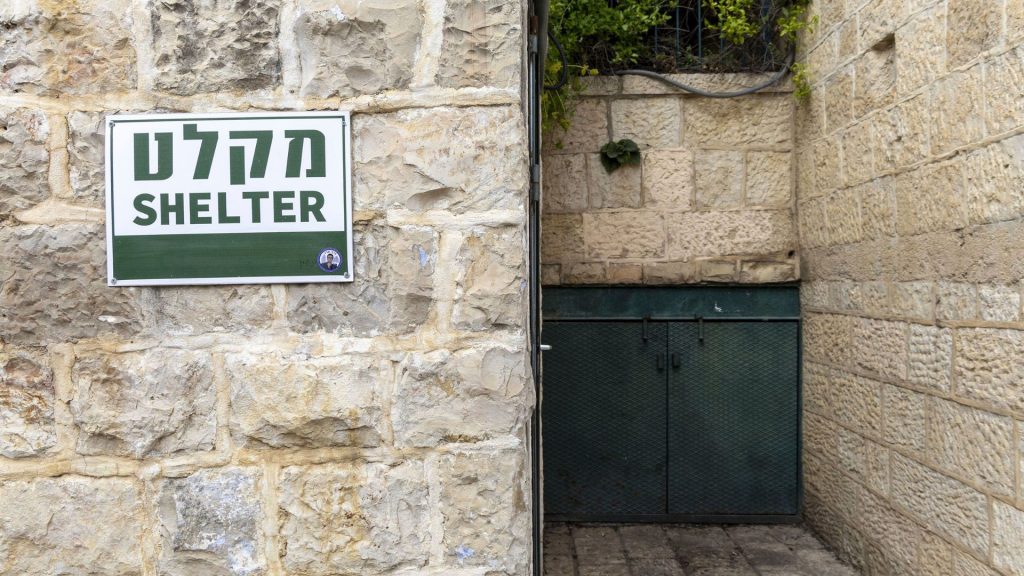
The rabbis beautifully expanded this vision. The Mishnah teaches that the roads leading to the Cities of Refuge were carefully maintained and clearly marked with signs reading, Miklat! Miklat! “Refuge! Refuge!” (Makkot 2:5). Rashi explains that bridges were repaired, roads widened, and every obstacle removed so that no one seeking safety would lose precious time. Mercy was never intended to be difficult to find.
That image should challenge every congregation. Are we making it easier for people to find God’s mercy, or harder? Have we placed obstacles in the road through pride, suspicion, gossip, unforgiveness, or harshness? Long before people hear our theology, they encounter our spirit. The question is whether that encounter points them toward refuge or away from it.
Justice and Mercy
Another remarkable detail is easily overlooked. The Torah explicitly says these cities were to serve “the Israelites, the ger, and the resident among them” (Bamidbar 35:15). The protection of justice extended beyond native-born Israelites. The ger, often translated “sojourner” or “resident alien,” was also entitled to refuge and due process.
This principle echoes throughout the Torah. Israel is repeatedly reminded that she was once a stranger in Egypt and therefore must not oppress the stranger living within her gates (Shemot 22:21; Vayikra 19:33–34; Devarim 10:18–19). The Torah never asks Israel to abandon justice, nor to forget mercy. Holding those responsibilities together has never been easy, but every discussion concerning immigration is ultimately a discussion about people created b’tzelem Elohim, in the image of God.
The principle extends far beyond immigration. Every generation wrestles with balancing accountability and restoration, justice and compassion. No legal system is perfect, yet Scripture continually calls every society toward justice without partiality, mercy without favoritism, and dignity for every person created in God’s image. That responsibility begins long before we influence governments. It begins in the ordinary ways we treat one another.
Becoming Cities of Refuge
What, then, is our personal responsibility?
The Torah was never intended to remain an ideal embodied only in Israel’s institutions. It was to be lived in the daily conduct of God’s people. Each of us is called to become, in a very real sense, a small city of refuge for those around us. We cannot erase the consequences of another person’s choices, nor should we excuse genuine wrongdoing. Yet we can refuse to become instruments of unnecessary shame, humiliation, or vengeance. We can become people whose presence reflects the character of the God we worship.
That calling may be more difficult today than ever before. We live in an age when reputations can be destroyed in hours, outrage often spreads faster than truth, and disagreement too frequently becomes permanent estrangement. Social media has made communication effortless, but it has also made condemnation effortless.
The Torah invites us to ask searching questions of ourselves. Am I being harsh or judgmental? Am I trying to remove the speck from another person’s eye while my own vision remains clouded (Mattityahu 7:3–5)? Am I helping to restore a brother or sister, or merely adding another stone to the pile? Perhaps the deepest question is whether others experience me as a place of refuge. Do people leave my presence more aware of God’s mercy or more burdened by my criticism?
Of course, mercy must never be confused with permissiveness. The Cities of Refuge did not abolish justice. They delayed vengeance until justice could be rightly discerned. The Torah neither excuses sin nor encourages revenge. Instead, it creates space where truth, repentance, and justice may flourish together.
Our generation wrestles with difficult questions involving criminal justice, addiction, mental illness, homelessness, immigration, and the restoration of those who have failed publicly. Faithful people may disagree about public policy, and these matters deserve careful thought, humility, and wisdom. Yet the Torah reminds us that justice without compassion becomes cruelty, while compassion without moral clarity becomes license. God’s people are not called to choose one over the other. We are called to hold both together, reflecting the character of the Holy One Himself.
The easiest place to begin is with our own lives. No legislation is required for kindness. No government can compel humility, patience, forgiveness, or gentleness. Every act of mercy becomes a testimony to the God we serve, and every relationship offers another opportunity to demonstrate that justice and compassion are not enemies but companions.
Mercy Fulfilled
When Yeshua ascended the mountain to teach, He did not diminish the Torah. He revealed its deepest intention.
“You have heard that it was said to those of old, ‘You shall not murder….’ But I say to you that everyone who is angry with his brother shall be liable to judgment” (Mattityahu 5:21–22).
The commandment had always aimed at more than outward behavior. Murder begins long before violence is committed. It begins in the heart that nurses resentment, contempt, and anger. Yeshua calls His disciples beyond mere obedience to the transformation of the inner life.
Throughout the Besorot, Yeshua repeatedly extends forgiveness to those who seek Him, yet His mercy is never separated from repentance. To the woman caught in adultery He says, “Neither do I condemn you. Go, and from now on sin no more” (Yochanan 8:11). Mercy is not permission to remain unchanged. It is God’s gracious invitation to become the people we were created to be.
From Sinai to Messiah, the story remains remarkably consistent. The Torah restrains vengeance and establishes justice. The Prophets call Israel to embody righteousness with compassion. Messiah carries that same calling into the hidden places of the heart, where anger, pride, bitterness, and hatred first take root. God’s purpose has always been to form a people who bear His likeness.
The Sages likewise remind us that just as the Holy One shelters the vulnerable, so His people are called to imitate His ways. The covenant community is not merely a gathering of those who believe the right things. It is a people whose life together reflects the mercy of the God who dwells among them.
Miklat! Miklat!
As Israel completes the journeys of Massei and prepares to hear Moses’ final words in Devarim, the Torah leaves us with one enduring image.
The Talmud tells us that at every crossroads leading toward a City of Refuge, signposts were erected bearing one simple word: Miklat! Miklat! “Refuge! Refuge!” (Makkot 10a). The roads were kept clear. Bridges were repaired. Obstacles were removed. No one fleeing for life should lose the way.
Before Israel could become a light to the nations, she first had to become a people of refuge. Before others could learn of the God of Abraham, Isaac, and Jacob, they had to encounter a community where justice and mercy walked hand in hand, where truth was joined to compassion, and where even the vulnerable stranger found protection beneath the covenant.
Perhaps that remains the measure of every Messianic Jewish congregation today.
Our calling is to become those signposts. Long before people find refuge in our synagogue, they should encounter refuge in our words. Before they experience God’s mercy in our worship, they should discover it in our homes. Before they hear us teach about grace, they should recognize it in the way we forgive, encourage, and bear one another’s burdens.
The world already has enough voices pointing toward condemnation. May we become a people who point instead toward the mercy of God. May weary travelers find rest among us. May strangers discover a home among us. May those who have stumbled encounter both truth and grace among us.
And may every road leading to our congregation be clearly marked with the same invitation that once stood at the crossroads of ancient Israel:
Miklat! Miklat!
Refuge! Refuge!
1 comment for “Mattot-Massei – Miklat! Miklat!”