
 Parashat Chukat is one of the most enigmatic portions in the entire Torah. It begins with a strange ritual, winds through miracles and mourning, and ends in paradox. The sages teach us that if we are willing to live with the mystery, really live with it, then we will find holiness in the confusion and clarity in the surrender.
In many ways, this is the perfect Torah portion to remind us who we are as a covenant people. We do not simply gather from time to time as individuals who happen to share a place of worship. We belong to one another. We are bound together in covenant with the Holy One and with one another in a relationship that is both beautiful and bewildering. We share in the mystery of communal covenant, a life together that reflects heaven in the earthliest of ways. Our joys and sorrows, our strengths and weaknesses, our faithfulness and failings all become part of a sacred tapestry in which no one journeys alone.
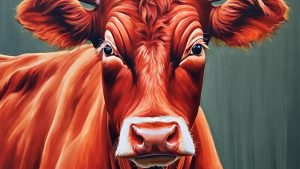
The portion opens with the strange law of the parah adumah, the red heifer. A pure, red, unblemished cow is burned so that its ashes can purify those who have encountered death. Yet, in a spiritual twist, the very people who prepare these cleansing waters become impure themselves. It is illogical. It defies human reason.
But perhaps that is precisely the point.
Our sages tell us this is a chok, a law not explained by reason, a decree of the King of Kings. Yet generations of scholars and sages still sought meaning in it. They saw in this mystery a deeper lesson, that healing and holiness sometimes require sacrifice, that to purify others, we ourselves must be willing to step into the mess, and that service often costs something real.
And is that not the truth of covenantal life?
To belong to the people of Israel and to a covenant community is to accept the call to care for one another even while we ourselves are still being cared for by God. It is to shoulder each other’s burdens, to step into each other’s lives, and to be transformed in the process. Covenant is never passive. It calls us continually to live, grow, serve, forgive, and sometimes ache together.
This parashah also tells of the deaths of Miriam and Aaron and of Moses’ fateful error at the waters of Meribah. These three children of Amram, Miriam, Aaron, and Moses, are called parnassim tovim, faithful shepherds of Israel. They lived lives full of paradox, chosen and chastised, celebrated and burdened. They led not for their own glory but for the redemption of a people.
Their example reminds us that covenant is not built merely on shared beliefs or warm feelings but on shared sacrifice. It is built on showing up for one another and continuing to walk together even when the road twists unexpectedly.
One of the most haunting images in the portion is that of the rock, the one that, in Miriam’s merit, flowed with water and followed the Israelites throughout the wilderness. When she died, the water stopped. And when Moses, in grief and frustration, struck the rock instead of speaking to it, the flow was delayed.
But eventually, it came. The rock still poured forth water. Trees still grew by its banks. And the tradition says the blood on the sand turned to roses.
This rock reminds us of something crucial. The sustaining presence of God often flows quietly and mysteriously beneath and behind our actions. Community does not thrive on perfection but on persistence. It thrives on listening before striking and on trusting that what we do here, when done in humility and hope, will cause sweetness to flow even from stone.
As members of this congregation and heirs of Israel’s covenant, we are called to remember that our life together is sacred work. Every act of kindness, every prayer uttered beside another person, every meal shared, every visit to the sick, every gift of tzedakah, every word of encouragement, and every heartfelt “Shabbat shalom” becomes a place where heaven touches earth.
Rabbi Abraham Joshua Heschel once wrote, “Perhaps the essential message of Judaism is that in doing the finite, we may perceive the infinite.”
That is what covenant community is. In the ordinary, finite acts of communal faithfulness, we perceive the infinite. We do not need to explain every mystery. We need only to live faithfully within it.
So let Parashat Chukat remind us who we are. We are a people who cry together and sing together, who disagree with love and seek reconciliation, who bear one another’s burdens and seek God through every season. We are a people bound not only by doctrine or history but by a shared covenant and a shared destiny.
May we be like the rock that followed our ancestors, steady, sustaining, and surprising. May we speak to one another with gentleness. May we draw sweetness even from the bitter. And may we continue to walk together as one people under the mystery, mercy, and majesty of God, remembering that our belonging to one another is itself a sacred gift and a holy calling.