
A Time To Move On
There are moments in life when we realize we have been standing still for far too long. Sometimes we remain in place because of circumstances beyond our control. More often, however, we remain because something within us has convinced us that we cannot move forward.
The opening chapters of Sefer Devarim begin with exactly such a moment. Israel has spent years camped at Mount Horeb when Hashem finally declares, “You have stayed long enough at this mountain. Turn and take your journey.” That command is far more than a geographical instruction. It is a spiritual challenge. Every one of us has mountains we were never intended to live beside indefinitely.
Yeshua speaks in much the same way to His disciples. Again and again His invitation is simple: “Follow Me.” The call of Messiah is never merely to admire Him from where we are. It is to leave what is familiar, trust Him, and walk toward the Kingdom He is bringing.
This year Parashat Devarim is read on Shabbat Chazon, the Sabbath of Vision, the Shabbat immediately preceding Tisha B’Av. That pairing invites an even deeper question. Deuteronomy asks why one generation failed to enter the Land. Tisha B’Av asks why later generations lost it.
These are not two unrelated stories. The first generation saw giants instead of God’s promises. Later generations saw enemies instead of brothers and sisters. Fear kept Israel from entering the Land. Baseless hatred eventually drove Israel into exile. Perhaps that is why this Shabbat is called Chazon, “Vision.” It is not merely a day for remembering destruction. It is a day for asking how we see. Do we see only mountains? Only giants? Only rubble? Or can we learn to see as God sees?
Mountains Become Ruins
The mountain that keeps us from moving is not always made of stone. Perhaps it is a mountain of negative self-perception that should have been left behind years ago. We have rehearsed our failures so often that we can scarcely imagine ourselves as anything else. Perhaps it is the mountain of comfortable predictability, where security has quietly replaced faith. We know exactly what tomorrow will look like and, although we complain about it, we secretly prefer it to the uncertainty of trusting God.
Perhaps it is the mountain of resentment, where old wounds and perceived injustices have become part of our identity. We replay old conversations, relive ancient hurts, and avoid relationships that desperately need healing. Or perhaps the mountain is a habit, a pattern of thought or behavior that offers temporary comfort while quietly preventing us from becoming the people God is calling us to be.
Individuals have mountains. Congregations have mountains. Entire movements have mountains.
At Kadesh Barnea, Israel’s mountain was fear. The spies saw giants, fortified cities, and impossible odds. Caleb and Joshua saw the very same landscape, but they interpreted it through the promises of God.
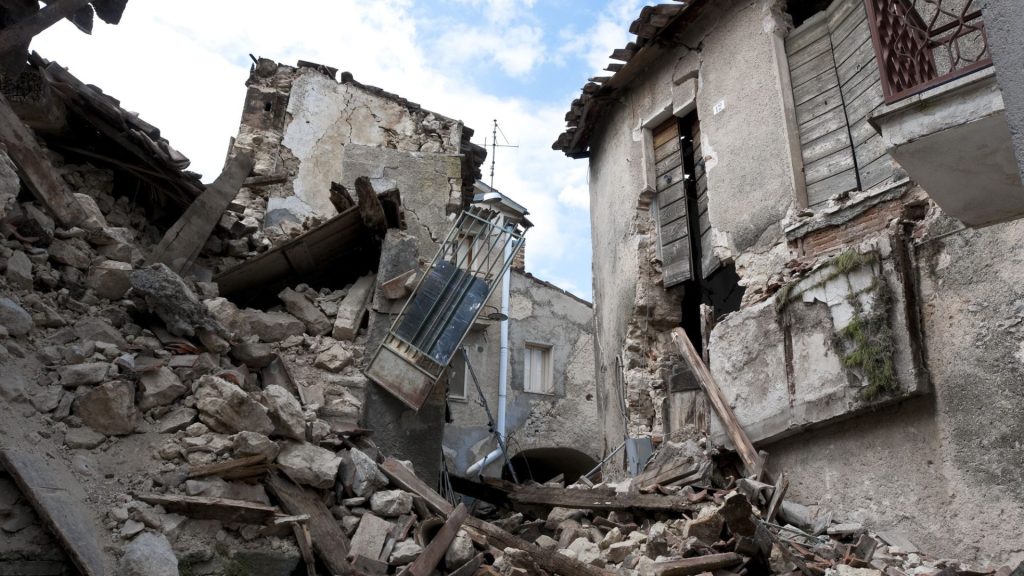
Centuries later, Jerusalem developed another mountain. Our sages teach that the Second Temple was destroyed because of Sinat Hinam, baseless hatred. Rome may have carried away the stones, but long before the armies arrived, something inside the people had already begun to crumble. Fear prevented Israel from entering the Land. Hatred prevented Israel from remaining there. The mountain eventually became rubble.
What Does the Land Look Like?
For those of us who follow Yeshua while remaining faithfully Jewish, the Land becomes more than geography. It becomes a picture of God’s future for His people.
Can we imagine a day when Jewish believers are no longer viewed as living on the margins of the Jewish community, but are welcomed as participants in its ongoing life? Can we imagine Yeshua being discussed naturally within Jewish conversation, not as the symbol of persecution, but as the Jewish Messiah whose life, teaching, death, and resurrection deserve thoughtful consideration? Can we imagine a generation in which Jewish identity and faith in Messiah are no longer perceived as opposites?
Can we imagine Jewish people attending a Messianic synagogue and saying, “That was one of the most meaningful Jewish services I have ever experienced”? Can we imagine family members asking sincere questions instead of offering fearful objections: “Tell me why you believe what you believe?”
Some dismiss such hopes as unrealistic. Every generation has had its skeptics. Yet the prophets repeatedly call God’s people to see beyond present realities. Faith has always required the ability to envision what God intends long before anyone else can see it. Perhaps that is precisely what Shabbat Chazon is asking of us.
Giants Always Look Bigger from a Distance
Like the spies in the wilderness, we are often intimidated by the giants standing before us.
Some point to the institutional resistance of the Jewish religious establishment. Yet Jewish history demonstrates that no single authority has ever completely determined Jewish thought or Jewish destiny. The conversation has always continued.
Others point to Rav Sha’ul’s teaching that “a hardening in part has happened to Israel.” But Rav Sha’ul also insists that the hardening is partial and temporary. It is part of God’s mysterious plan, not its conclusion. Yeshua Himself lamented over Jerusalem, crying, “Jerusalem, Jerusalem…” His words were filled with grief, but not despair. Even His lament ended with hope: “You will not see Me again until you say, ‘Blessed is He who comes in the name of the Lord.'” Judgment was never His final word. Restoration was.
Others point, understandably, to the painful history of antisemitism committed by people claiming to represent the Messiah while acting in ways utterly contrary to His character. Those wounds are real and cannot be minimized. Yet history continues to change. Jews and Christians encounter one another today in ways that would have been unimaginable only a few generations ago. God continues to draw Jewish people to Himself, one life at a time. After all, He reached each of us.
Caleb never denied the existence of giants. He simply believed that God was greater. Faith does not ignore reality. It simply refuses to let reality have the final word.
Vision Changes How We See People
Perhaps the greatest obstacle before us is not theological at all. Perhaps it is relational.
One of my favorite stories comes from Rabbi Levi Yitzhak of Berditchev, who encountered a Jewish man openly smoking on Shabbat. Rather than condemning him, the rabbi gently searched for every possible excuse.
“Perhaps you didn’t realize today is Shabbat?”
“I know it’s Shabbat.”
“Perhaps you didn’t know smoking is forbidden?”
“I know that too.”
Finally, Rabbi Levi Yitzhak lifted his eyes toward heaven and exclaimed, “Master of the Universe! Look how honest Your people are! Even when they sin, they refuse to lie!”
There is profound wisdom hidden beneath the humor. Rabbi Yehoshua ben Perachyah teaches in Pirkei Avot, “Judge every person favorably.” Rebbe Nachman of Breslov urges us to search until we find even one spark of goodness in another human being, for from that spark we may begin to lift the whole person. Rav Sha’ul echoes the same principle when he writes, “In humility, regard others as more important than yourselves.” And Yeshua declares, “By this everyone will know that you are My disciples, if you have love for one another.”
Notice how these voices, separated by centuries, are singing the same melody. They remind us that every person bears the image of God. Every soul is worthy of dignity. Every encounter is an opportunity either to strengthen the foundations of God’s Kingdom or to add another stone to the rubble. If Sinat Hinam destroyed the Temple, then surely Ahavat Hinam, unconditional love freely given, prepares the way for its restoration.
Perhaps that is one of the clearest visions that Shabbat Chazon offers us.
Rebuilding Begins with Vision
The Three Weeks of mourning invite us not only to remember the destruction of Jerusalem but also to envision what Hashem intends to rebuild. Our sages teach, “Whoever mourns for Jerusalem will merit seeing her joy” (Ta’anit 30b). Jewish mourning is therefore never despair. We grieve because we believe that Hashem is not finished. Every tear shed for Zion carries within it the seed of hope.
Yeshua stood overlooking Jerusalem and wept. His tears were not merely for what would be lost but for what might have been. “If only you had known on this day what would bring you peace.” His grief was not born simply of judgment. It was the sorrow of rejected love, the lament of One who longed to gather Jerusalem’s children as a hen gathers her chicks beneath her wings. Yet even His lament was not His final word. He promised, “You will not see Me again until you say, ‘Blessed is He who comes in the name of the Lord.'” Even in judgment He foresaw restoration. Even in exile He envisioned homecoming.
Yeshua also declared, “Destroy this Temple, and in three days I will raise it up.” As followers of Messiah, we understand that He Himself became the rejected Temple, bearing in His own body the rejection, suffering, and hope of Israel. The One who was cast aside became the cornerstone of God’s new work. Rav Sha’ul carries this vision even further, reminding us that we ourselves are God’s Temple and that His Spirit dwells among us. Every act of forgiveness lays another stone. Every reconciliation restores another wall. Every kindness becomes another beam in the house that God is building. The restoration of Israel begins long before stones are once again placed upon Mount Moriah. It begins whenever God’s people begin to resemble the character of the Messiah. Perhaps that is the deepest vision of Shabbat Chazon: not simply seeing what once stood, but seeing what God is already rebuilding.
Our Calling
If that is God’s vision, then what is our responsibility? We cannot simply wait for redemption while standing comfortably beside our mountain. We must become participants in what God is already doing.
That means embracing Jewish life not merely as a means of witness, but as an authentic expression of who we are as members of the covenant people. Jewish practice is not a costume we wear in order to persuade others. It is part of our identity and our calling before God.
It also means engaging the wider Jewish community with humility, patience, and genuine love. Relationships are rarely transformed through arguments alone. More often, they are transformed through lives marked by integrity, compassion, faithful presence, and patient listening.
It means walking deeply with Hashem. Cultural Judaism, or what we might call “country club Judaism,” has never transformed anyone. The living reality of God’s presence in a person’s life remains the most compelling testimony we possess. People may debate our theology, but they cannot easily dismiss a life that reflects the character of the Messiah.
Our calling also includes the continued maturation of the Messianic Jewish movement itself. We need thoughtful and faithful halachic reflection that takes Jewish tradition seriously while remaining centered upon the person of Yeshua. Such guidance should provide stability without rigidity, conviction without fear, and faithfulness without losing sight of the realities of modern Jewish life. Above all, we must refuse to surrender hope, for hope itself is an act of faith.
A Word for the Impatient
Moses reminded Israel that although the unbelieving generation would not enter the Land, their children would. That promise still speaks to us. Perhaps we are not the generation that will witness the full flowering of God’s purposes. Perhaps we are pioneers, preparing the road for those who come after us.
Rabbi Tarfon wisely reminds us, “It is not your duty to complete the work, but neither are you free to desist from it.” Elsewhere he teaches, “The day is short, the work is great, the laborers are sluggish, the reward is abundant, and the Master of the house is urgent.” Those words have lost none of their urgency.
Messiah may return tomorrow, accomplishing in a single day what centuries of faithful labor have only begun. Or He may tarry for another hundred years, or another thousand. That belongs to Him. Our responsibility is not to determine God’s timetable but to remain faithful: to plant, to build, to love, to pray, and to prepare the way for those who follow.
Conclusion
At Horeb, Israel saw a mountain. At Kadesh, they saw giants. At Jerusalem, later generations saw only rubble. Yeshua looked upon the very same people and saw a harvest. That is the difference between human vision and God’s vision. One sees obstacles; the other sees possibilities. One sees what has been lost; the other sees what can yet be redeemed.
Shabbat Chazon invites us to ask a simple but searching question: What do we see? Do we see only the mountains that have held us captive? Do we see only the giants standing before us? Do we see only the rubble left behind by fear, disappointment, and broken relationships? Or have we begun to see what Hashem sees: a people still loved, a city still promised, a Kingdom still advancing, and a harvest still waiting?
May Hashem give us eyes to see beyond the mountains, beyond the giants, beyond the rubble, and into His promised future. May He teach us to recognize His image in one another, to replace Sinat Hinam with Ahavat Hinam, and to become faithful builders of His Kingdom.
May we hasten the day when Zion is comforted, Jerusalem is rebuilt, and the words of the prophet are fulfilled: “The fast of the fourth, the fifth, the seventh, and the tenth months shall become occasions for joy and gladness and cheerful festivals for the house of Judah.”
May we also live to see the day anticipated by Rav Sha’ul, when “all Israel will be saved,” because “the Deliverer will come from Zion,” and our people, in numbers beyond anything we can presently imagine, embrace the God of our fathers through the Messiah of Israel, Yeshua.
Until that day, may we refuse to remain at the mountain. May we walk by faith rather than fear. May we become living stones in the Temple that God is building, leaving to our children, or to our children’s children, a vision worth inheriting.
Ken yehi ratzon. Amen.
2 comments for “Chazon and Devarim: The Vision Beyond the Rubble”